
Description
Purpose
Trezor is the original hardware wallet brand, created in 2013, built for self-custody of Bitcoin and other cryptocurrencies. Private keys are generated and stored on an offline device, so funds stay under the owner's control, protected from exchange hacks and online attacks.
Key Features
- Cold storage security — private keys never leave the device; every transaction is verified on screen before signing
- Open source — 100% open-source code and design, auditable by anyone
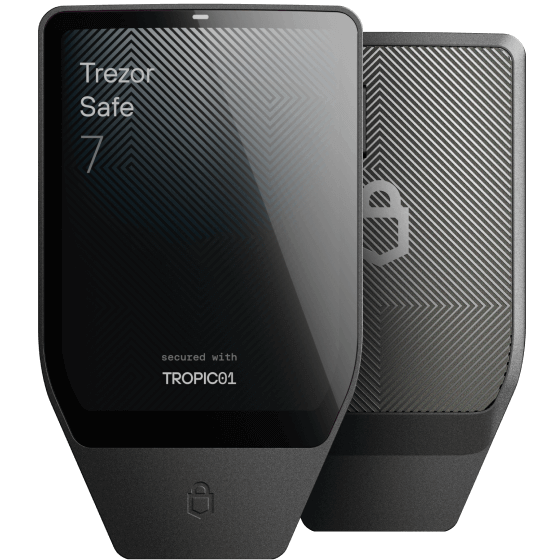
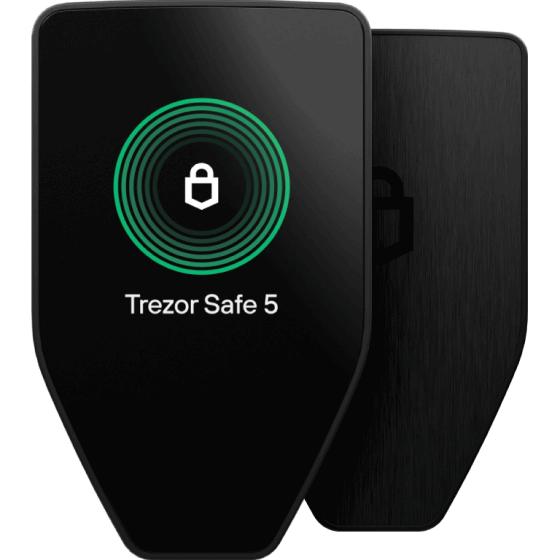
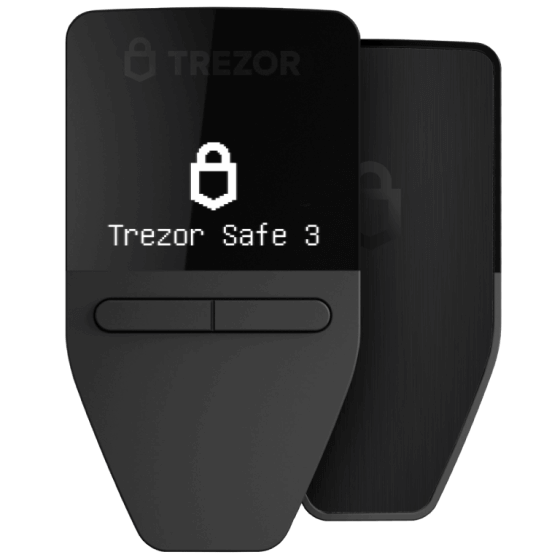
- Model lineup — Trezor Safe 7, Safe 5, and Safe 3, including Bitcoin-only editions and legacy Model One / Model T
- Trezor Suite app — buy, swap, stake, and track a portfolio across desktop and mobile
- Wide compatibility — thousands of coins and tokens, 70,000+ dApps via WalletConnect, 30+ third-party wallet integrations
- Recovery & backup — a recovery phrase restores funds on any Trezor; optional passphrase and Keep Metal backup for extra protection
Main Use Cases
- Long-term cold storage of Bitcoin and altcoins
- Securely interacting with DeFi dApps and NFTs
- Full self-custody for users moving funds off exchanges
Highlights
Pros
- Flexible recovery options — 12-, 20-, or 24-word seeds or Shamir multi-share backup — restore the wallet on any Trezor if the device is lost or damaged.
- Newer Safe models (Safe 3, Safe 5, Safe 7) carry a Common Criteria EAL6+-certified secure element, with Tropic01 billed as the first transparent, auditable secure element.
- Supports thousands of coins and tokens across Bitcoin, Ethereum, Solana, Base, and more, connecting to 70,000+ dApps via WalletConnect and 30+ third-party wallets like MetaMask.
- Trezor Suite bundles buy, swap, stake, and portfolio tracking with privacy tools like Tor integration and coin control.
- Invented the hardware wallet category — the Model One (2014) was the first commercial hardware wallet, and Trezor has since protected 2+ million users with 12+ years of open-source development.
- Firmware, bootloader, and hardware schematics are fully open source, so the code can be independently audited and verified by anyone.
Cons
- Older models like the Trezor One lack a secure element, and Kraken Security Labs demonstrated that physical voltage-glitching can extract their seed phrases (requires physical access and specialized equipment).
- Staking and DeFi functionality is not native across most chains, so users must rely on third-party apps and integrations for many protocols.
- Customer support is ticket-based only with no phone line, and warranty terms vary for purchases made outside the EU.
- Native asset support is narrow on entry models — Solana, Cardano, XRP, Monero, Tezos, and EOS require third-party wallets like NuFi or MetaMask.
- Most models have no Bluetooth or battery, and iPhone users cannot sign transactions because Apple restricts USB-C accessory use — mobile flexibility trails rivals like the Ledger Nano X.
- Entry models pair a tiny 0.96-inch monochrome display with two-button input, making PIN entry, passphrase typing, and address verification slow and tedious.