

Description
Purpose
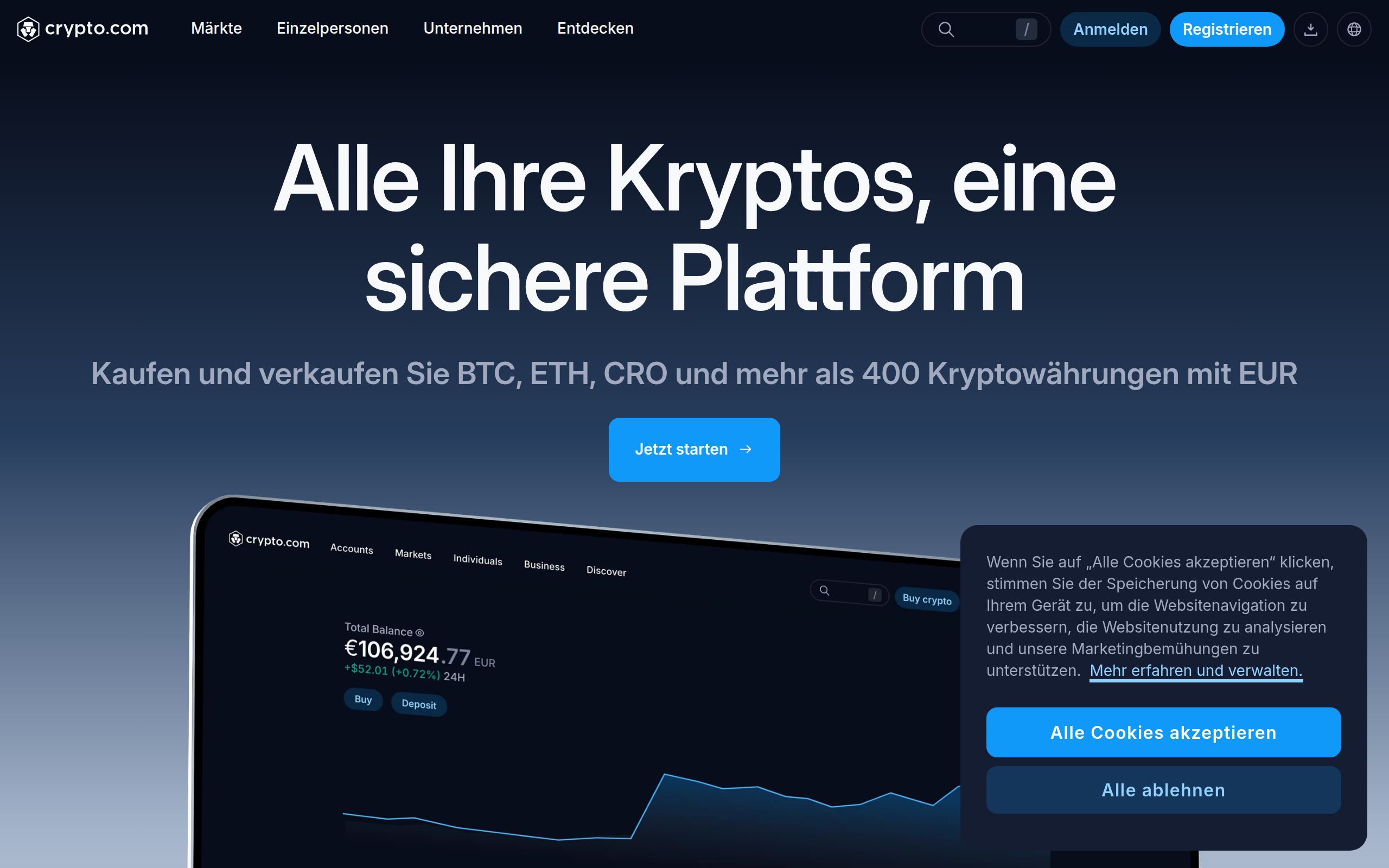
Crypto.com is an all-in-one platform for buying, selling, and managing cryptocurrency, trusted by over 150 million users since 2016. It operates under MiCA, EMD, and MiFID II licenses across Europe.
Key Features
- App — buy, sell, and trade 400+ cryptocurrencies with fiat on-ramps and low fees
- Visa Card — spend crypto and earn up to 5% CRO rewards
- Staking — lock assets to secure blockchains and earn rewards
- Onchain Wallet — self-custody Web3 wallet with DeFi access
- Pay — pay with crypto at 300,000+ stores
- Security — up to $250,000 Account Protection Programme, verified proof of reserves
Main Use Cases
- Buying and selling crypto with fiat on a regulated platform
- Earning staking rewards while supporting blockchain network security
- Spending crypto daily with a Visa card
- Exploring DeFi with full control of private keys
Highlights
Pros
- Serves 150M+ users worldwide with buy, sell, and trade access to 400+ cryptocurrencies across 1,000+ trading pairs.
- Self-custody Onchain wallet keeps private keys with the user, with multichain access to hundreds of DeFi dApps.
- Publishes a verifiable Proof of Reserves so users can independently confirm balances are backed by real assets.
- Regulated in the EEA as a MiCA-licensed Crypto-Asset Service Provider, with additional Electronic Money Institution and MiFID II investment-firm licenses.
- Account Protection Programme covers eligible users for up to $250,000 against unauthorized transactions.
Cons
- Accounts are sometimes restricted without a clear explanation, leaving funds locked pending extended review.
- Support is mostly chat-only with limited phone availability, and reviewers report slow, bot-like responses and multi-hour waits.
- Trustpilot score sits around 1.6/5 across 9,300+ reviews, with 73% one-star ratings citing frozen funds and blocked accounts.
- Funds sit in centralized custody by default, so users rely on the platform's security and reserve attestations rather than self-custody.
- Available coins, card, and features vary by region, with U.S. users getting a more limited, app-centric service.